Adele is Professor of Social Work at the University of Huddersfield. Born in Manchester to English and Sierra-Leonean parents in the year dot, she and her three brothers lived their childhoods across several countries. A social worker for many years, Adele later became an academic activist and is known principally for her work with vulnerable women and children for which she was awarded an OBE in 2021. Adele has led research in 19 countries, has published widely and is the founder of the None in Three Centre for the Global Prevention of Gender-based Violence. Mum to one adored son, she has retired to write, play the sax and chill in her adopted home, Barbados with her husband.
Professor Adele Jones, University of Huddersfield.
25.09.17
I am Adele.
I am Professor of Social Work at the University of Huddersfield, married to a lovely guy from Barbados, mum to one adored son and nana to a growing band of grandchildren. I was born in Manchester to English and Sierra-Leonean parents in the year dot and together with my three brothers spent a childhood traversing three countries: England, Cyprus and Sierra Leone. My parents were in the Air Force, hence the nomadic lifestyle – we were ‘forces kids’. There is much to be said about how four mixed-race kids came to be in these vastly different worlds – that’s for another time but here’s a glimpse into my life with my brothers.
I qualified as a social worker at Leeds University and spent the first part of my working life as a child and family social worker in the North of England. I later became an academic and for the next 25 years taught and carried out social research. Social work was in my genes, traits inherited from my mum… it explains why I have spent a lifetime trying to improve the situation of women and children. I have led research in 19 countries on topics as diverse as HIV-AIDS, street children, child soldiers, children of prisoners, refugees and abuse survivors. Looking back, my colleagues and I have reason to be proud. In the Caribbean our work on HIV-AIDS and on child sexual abuse (both firsts) helped shaped policy and practice and across Europe, the COPING Project raised the profile of children of prisoners. There are other examples too, the most recent being the None in Three Centre for the Global Prevention of Gender-based Violence which I founded in 2016 and which has developed interventions to tackle different forms of gender-based violence in eight countries (see Post 5).
‘Publish or peril’ is the mantra academics live by but when my nights closed in, it was not the Dean’s imperative that occupied my mind but what more could be done to stem the violence we were writing about. Though frequently tortured by self-doubt, I never once doubted the importance of our research. That said, it sometimes felt like we were pushing water uphill with a fork. Feeling a sense of despair is OK but you can’t let this settle into your bones. A friend once said she thought research into domestic violence was futile… her point was that we already know so much yet little seems to change. I understood and yet I was incensed. It felt like another attempt to silence victims. Here’s an extract from the letter I wrote in response:
Dear Liz
You open your newspaper to read that another woman has been murdered by her husband. Stories of domestic violence are everywhere and you are not convinced that research helps at all. There have been many studies – but what difference have they made? Surely the money could be better spent. I understand why you might think this way but I don’t want you to give up on the benefits of research and so I am writing to you to explain why I believe research has its place. I can’t prove to you the benefits of the research the None in Three team has carried out but lack of knowledge can never be a good basis for the work societies have to do to rid themselves of violence. Also, I’ve never met a victim yet who didn’t think it was important for people to better understand what she went through. I grew up in a home where my mother was regularly brutalised by my father and this is an inescapable fact of my being. When she fled the house, he saw this as his opportunity to turn his attentions to his daughter, to inflict other kinds of violations – this is also an inescapable fact. Domestic violence and child abuse do not define or confine me but the truth is that these inescapable facts lie at the heart of my drive to find out why men hit, why women cannot leave, how the values of violence get transmitted across families and communities and how it is, in so many cases, they do not. Gender inequalities shut women up in multiple ways – my mother was strong and resilient but she had no voice and violence had destroyed her belief in her right to be heard anyway. If domestic violence research is about nothing else, it must be about women’s right to be heard, or indeed the right of any victim (men also) to be heard. But domestic violence research must be more than this too – it must transcend the facts of our individual lives to provide robust evidence about the causes and consequences of violence more widely….
There is still much to be done, but I’ve passed on the baton and have eased myself into retirement. I look forward to sleeping at nights and to new adventures. I hope to write (released from the threat of peril it might even be fun), spend more time playing my saxophone and perhaps I’ll pick up the promises to myself that I abandoned along the way. Then again, I might simply lounge on the sofa soaking up Netflix movies. Having no clear plan seems about the best kind of plan right now.
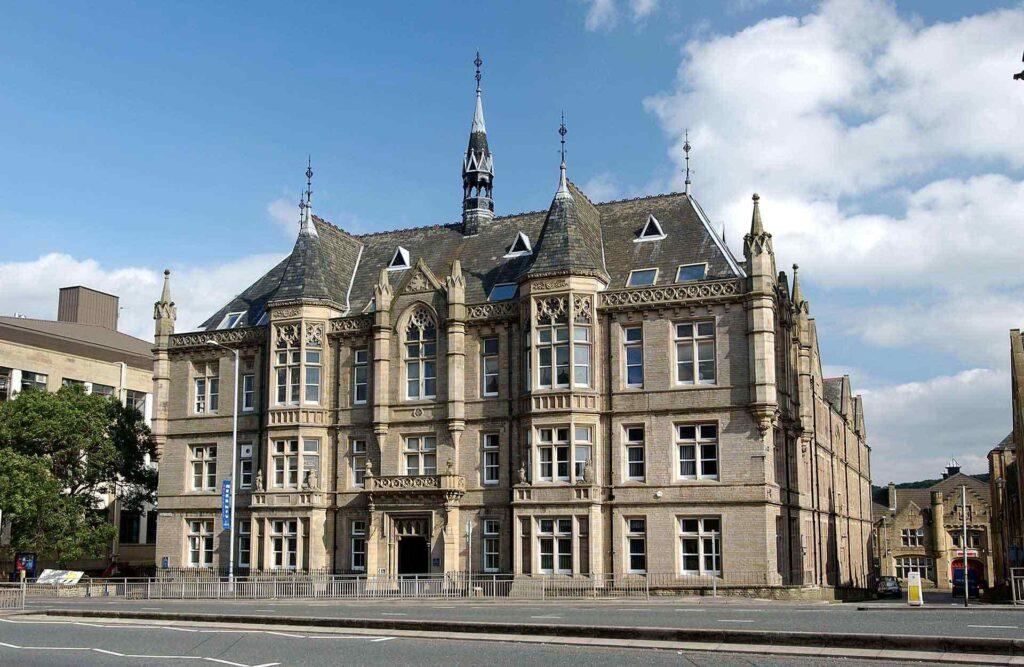
My office at Huddersfield University is in a Hogwarts of a building, the Ramsden Building which is named after Sir John Ramsden, 5th Baronet and Lord of the Manor of Huddersfield. The Ramsden Building is a much loved icon of the town.
I’ve never loved it, I don’t even like it. For me it symbolises wealth and white male privilege. There is no doubting it is a beautiful building but I’ve always felt an imposter walking through its hallowed halls. Too many of my struggles in academia have been to do with white male privilege and my spirit would sink to my boots whenever I entered. As ridiculous as it sounds, I always expected someone to tell me to get out.
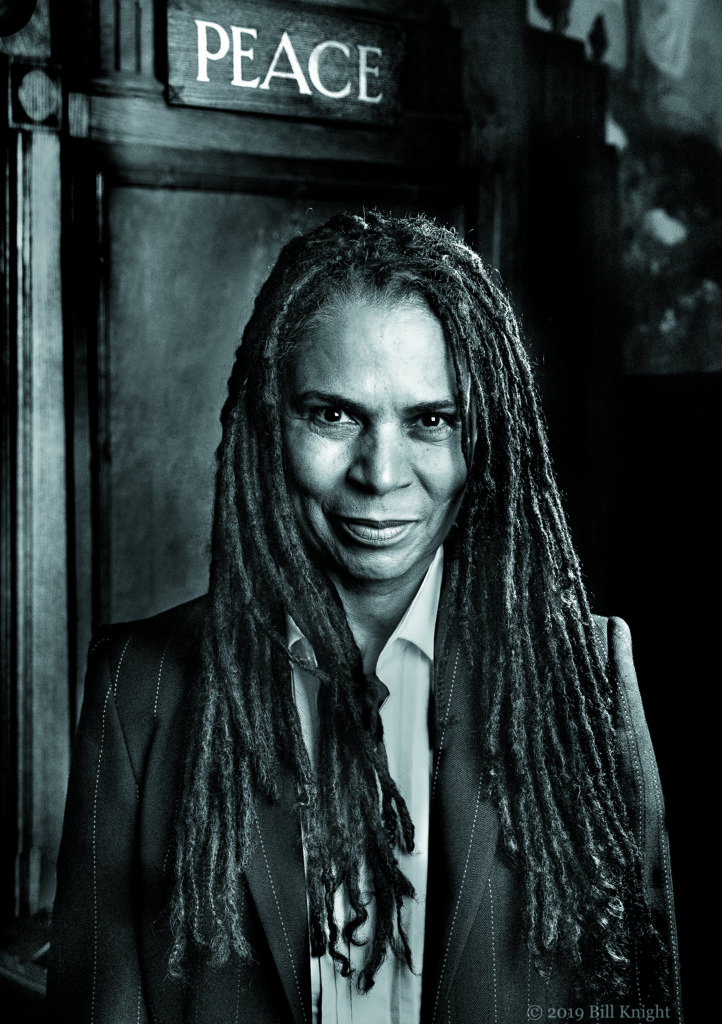
In 2019, I was featured in Phenomenal Women: Portraits of UK Black Female Professors, an exhibition at the South Bank Centre which highlighted gender and race discrimination in academia and drew attention to the fact that out of 19,000 professors in UK universities, at the time only 35 of them were black women.
I’m sure you can imagine the isolation, the alienation, and the struggles I faced. Like so many black and minority ethnic people have found, academia is not a safe space; overt and covert racism is everywhere, not to mention sexism – you don’t have to look for it, it will come looking for you. But I was in love with my discipline and I was in love with research and so I wasn’t about to leave. Furthermore, I was passionate about doing what I could to end violence against women and children and so, together with like-minds from around the world, I created the None in Three Centre (www.noneinthree.org – more about the centre later). Here, among a team of empathic, inclusive and caring colleagues I was able to bury myself in my work rather than having to fight racism every day. These amazing people were the reason I survived. And so back to the exhibition…
I cannot speak for the other black women professors but over the years I faced hostility and isolation for daring to excel; much of the racism and sexism were subliminal, some of it overt and all of it hurtful. I’ve worked in four institutions and notwithstanding the friends I made and the allies who stood beside me, I never really made it into the club. Social exclusion can happen anywhere but masked by their lofty academic aspirations, universities get away with forms of discrimination that would be more evident elsewhere. Things eased as I became more successful but I continued to see discrimination played out. In promotion committees for instance, I would find myself on the minority side of an argument in which others were blocking a woman’s promotion by pointing out that she did not meet all the criteria set out in the rules, despite the fact that those (mostly men) making this judgement had often bypassed the requirements themselves. A particularly cruel example of racism was when a brilliant young African research fellow working with me was given an extension to his contract so that his publications could be included in the latest research assessment exercise only to immediately have it terminated after he was no longer of use. Shockingly, at the same time, two white research fellows were given permanent positions. My outrage was met with a brandishing of rules in support of the decision and I was asked “you don’t expect the rules to be bent because he’s black, do you?” Well, hell yes! Why not since the rules are clearly being used to sustain the status quo. I learned two things – being a woman Prof didn’t give me much power in a mostly white male club and secondly, rules are not to be trusted. This second lesson was to prove liberating: if there are rules concerning a particular activity do your homework, find out when and why the rules have previously been broken and use the precedent to help in your arguments. This helped me win several subsequent battles.
In spite of the challenges, I never contemplated leaving. I was in love with my discipline and passionate about my research. I survived by inviting like minds to work with me and I surrounded myself with empathic colleagues from across the globe. This is how I was able to do my best work. Fighting racism is important; indeed for many black people in the UK it’s part of the day … you get up, have breakfast, brush your teeth, go to work and … you fight racism. But it can drain your energy and destroy your ambitions – it cannot be all you do. Being part of the None in Three Centre (www.noneinthree.org – see Post 5) showed me what was possible in an inclusive team. Here, I was more than just the response to the racism of others and here, I was able to thrive.
And so back to the exhibition…
Invited to have my portrait taken, I chose the Ramsden Building for my location and in that single act of self-empowerment, dispelled the ghost of Sir John and claimed the right to be at ease in my workplace.
My great, great (many times removed great) grandfather, Henry Jones, worked for Robert Burnet Jones on his plantation in Barbados. Henry Jones was a slave and was owned by Robert Jones (1750-1817), an English Planter and the Governor General of Barbados at the time. The slave master who owned you also gave you your surname – lest there is any misunderstanding this is a symbol of ownership, not kinship. Robert’s plantation grew cotton. It was in cotton production that the industrial revolution began. Henry picked the cotton and Robert exported it to North Yorkshire where it found its way to Sir John Ramsden’s ancestors to be woven into cloth in their factories. Despite the fact that slavery had helped the Ramsden family become rich, when the anti-slavery movement gained traction, John Charles Ramsden (head of the family at the time), thought it might be politically expedient to publicly express support for the abolitionist cause. In actuality John had qualms about how this would affect his wealth and later withdrew his support. The Whitby Anti-Slavery Society felt compelled to put JC Ramsden’s name on a list of politicians unlikely to vote for abolition because he had a vested interest in slavery continuing (https://books.google.com/books?id=0rK7tmI- Wb8C&printsec=frontcover&source=gbs_atb#v=onepage&q&f=false).
Fortunately, Henry Jones’ freedom was not dependent upon J.C Ramsden’s vote and the abolitionists had their way. Henry subsequently joined hundreds of other former slaves who chose to repatriate to Africa. Sierra Leone on the west coast of Africa was formerly a key departure point for captured slaves but in 1787, the British established a settlement there for those that had been freed and named it Freetown. Henry Jones made his home in Freetown. To this day, Henry’s descendants and those of other former slaves (who are known as Creole or Krio) carry the names of former slave masters: Jones, Thomson, Smith, McAuley and so on and so on. Stay in Freetown but fast-forward through the centuries to 1924; this was the year that Winston Henry Jones was born. Sierra Leone was a colony of the British Empire until it achieved independence in 1961 and Winston, a descendant of Henry Jones was also therefore, a British subject. Winston Henry Jones was my father.
Winston came to the UK in the 1940s to join the Royal Air Force in support of the “Mother Country” (his words) where he met my mum, Betty.
The weaving together of the Ramsden and Jones families is a product of my imagination, but much of the story is actually true. There was a plantation owner in Barbados named Robert Burnet Jones and I am descended from a former slave named Jones who settled in Freetown. One might struggle to find anything but liberal philanthropy in the Ramsden history and no obvious connection with slavery but dig deep enough and it’s there. The Ramsdens were one of the richest families in England; they owned a great deal of Yorkshire and the industrial revolution which gave them their wealth was fuelled by slavery.
The links between slavery and British colonization are crucial in understanding my family’s past and also in understanding why equality and inclusion are fundamental to who I am. My unease in the Ramsden building was not therefore, simply the contrivance of a fickle disposition.
In January 2021, I was listed as a recipient of the Queen’s New Year’s Honours and awarded the title ‘Officer of the Order of the British Empire’ for my work with vulnerable women and children. Although I am very appreciative of the award, the irony of a title that is so symbolic of what my ancestors railed against is not lost on me. Was it worth the historical cost, most definitely not! But I spent a long time fighting invisibility and accepting this recognition is as much a political statement against racism and exclusion as anything else.
Betty and Winston would have been proud, but I do wonder what Henry would have made of it.
My mum was subject to abuse and violence for much of her life and was determined to share her story so that other women might be helped. It was also important to her to explain the ways in which domestic violence impacts children. And so, she wrote. When her arthritis became too bad to hold a pen, she typed and when she was no longer able to type, she dictated… and this is how the story of Betty Jones was told. Sadly, she died before the book was to see the light of day. But, a few years after her death, her eldest grandson dusted the manuscript down and submitted it to publishers – ‘For All of My Life by Betty Jones‘ is available on Amazon and you can hear an excerpt here.
Inspired by my mum’s experiences of domestic violence in 2016 I founded the None in Three Centre for the Global Prevention of Gender-based Violence. The Centre is a home to global researchers dedicated to preventing violence against women and children. To date, we have carried out work in eight countries (the UK, Grenada, Barbados, St Lucia, Jamaica, Uganda, India and Brazil) tackling problems such as child marriage, child sexual abuse, on-line sexual exploitation, intimate partner violence among adolescents & domestic violence. The Centre is named after the global statistic that 1 in 3 women will experience sexual or physical violence in their lifetime.
“They said ‘none in three is an unattainable statistic, it is naive, unrealistic’. I said “What figure would you be comfortable with; one in 5, one in 10 or perhaps one in 50? And when you have figured this out, tell me who will be the one victim of gender-based violence you would be willing to sacrifice to make you more comfortable- you, your sister, your daughter? They said nothing more” (Adele Jones)
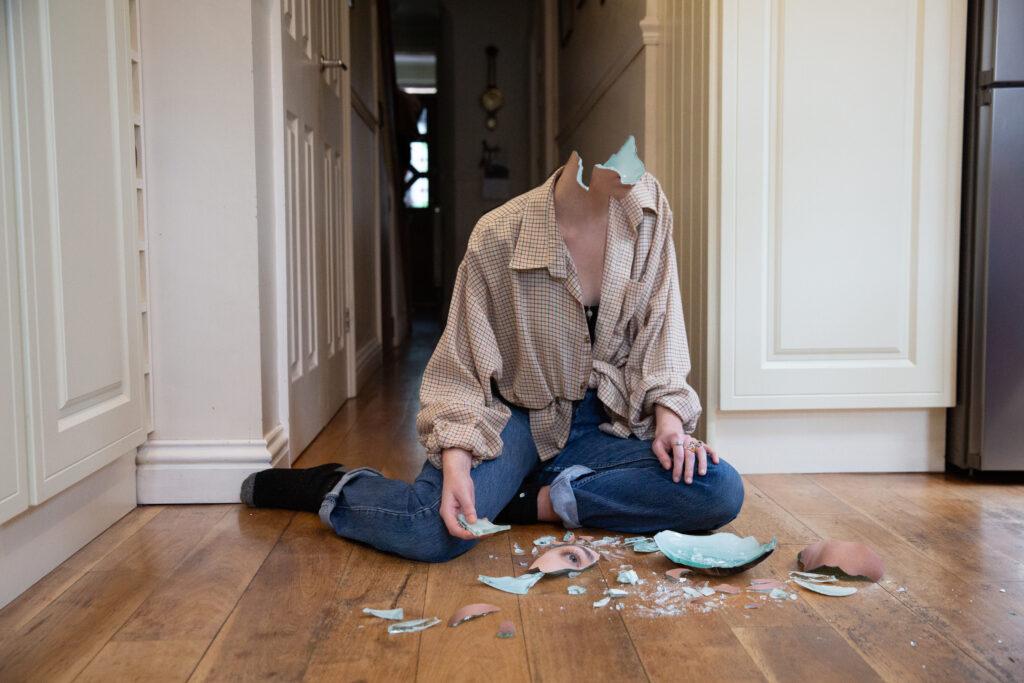
‘Broken’ by Suzie Larke
The Centre carries out new research to better understand the social and cultural factors that drive violence against women (primarily) and children and uses the findings to create digital and other types of interventions aimed at changing the attitudes and values that underpin the problem. The work is exceedingly demanding and the stories of abuse are horrific. But there are also stories of resilience, hope and change – it’s important to know this.
We make extensive use of the creative arts and social media in getting our research findings to the general public and have won several awards. This exhibition by the artist Suzy Larke was the backdrop to a policy forum organised by the Ni3 team in the UK.
‘Losing Yourself’ by Suzie Larke
Below are some short films depicting different aspects of our work; there are over 100 more films on the IDEA (Impact, Dissemination and Engagement Activities) Hub of the Ni3 Centre website (http://www.noneinthree.org/impact/).
In the days of debilitating illness that my mother suffered during the last years of her life, I would climb into her bed to watch TV with her. I would rub the back of her hands and try to smooth out the kinks from her arthritic fingers. I don’t know why I did this, but I gained comfort from it, and I think she did too.
A fan of Caribbean poetry, I came across Meiling Jin’s poem around the same time and adopted the refrain “they are all the same, beautiful” which played over in my mind as I caressed that threadbare skin. I did indeed Eulogize my mother’s hands but after she died in 1997, I never read the poem again although the book still sits on my bookshelf. (By the way, I highly recommend Jin’s work for its profound insights into racism and social exclusion).
When she invited me to participate in this project, Claudia Molitor, the curator of My World gave me a remarkable gift in encouraging me to seek out the gems of buried memories. Recalling the eulogy to my mother’s hands is one such gem and I am emboldened anew by the idea of eulogizing women’s pain – for how else can we be sure not to forget?
My mum, Betty Jones now lies in Willow Grove Cemetery in Stockport, where she has been for a quarter of a century. When I think of Willow Grove Cemetery I recall roses grown wild, higgledy-piggledy gravestones, the giggles of little girls and the triumphant yell of a cricket run being scored. I once heard – “Toby, stop pissing up that monument! that’s for war heroes”.
Despite the weeping willows, it’s not the place of mournful weeping one might imagine for a cemetery. It is actually teeming with life and quite sinfully, is often teeming with laughter! If you like your graveyards sombre, its visitors bowed and reverent, then this is not your place.
Don’t get me wrong, there are weepers. I’ve even been one…. my beloved mum is buried here as is her mum, the grandma I never knew but loved just the same. Some graves have many relatives interred but there’s no-one else in the mums’ grave so there’ll be space for me when my time comes. Its impossible not to feel at ease in this most inclusive of places; I sit on a neighbour’s gravestone with a flask of tea and a custard tart (mum loved a custard tart) and tell her the latest family news, who’s been born, who’s in trouble and who could do with a prayer.
Willow Grove Cemetery is pretty special. There, I stumbled upon a Spice Girls’ performance on top of a Memorial Wall bearing the names of soldiers who died in the war. I like to think the soldiers were smiling – what else to do but smile at five little girls singing ‘Wannabe’ and dancing all those horrific memories into hope. I’m a pacifist (although with a propensity for rage that’s not quite in keeping with this statement – there are things even a pacifist should fight for) but I’m really glad that soldiers are important at Willow Grove, and not just to the Spice Girls – mum would like that.
‘Invisible Kisses’ by Lemn Sissay dedicated to my mum, whose own life drove my research and the embers of whose memory, I fan into life every single day.
The snapshot of my world as an academic and my family history explain why the struggles I have been engaged in are so important to me. While this isn’t the place to share the many other parts of me, as wife, mother, sister, friend etc., I would like to give you a glimpse of the younger me as an activist within my local black community.
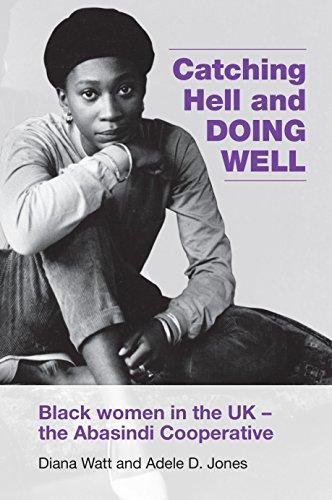
In 2015, together with my friend Diana Watt, we published a book: “Catching Hell and Doing Well” – Black Women in the UK.
This was the story of the Abasindi Cooperative, a black women’s organisation based in Moss Side in Manchester. The book was a labour of love because unlike the other books I’ve published, it was entirely devoted to the acknowledgement and celebration of the activism and achievements of black women.
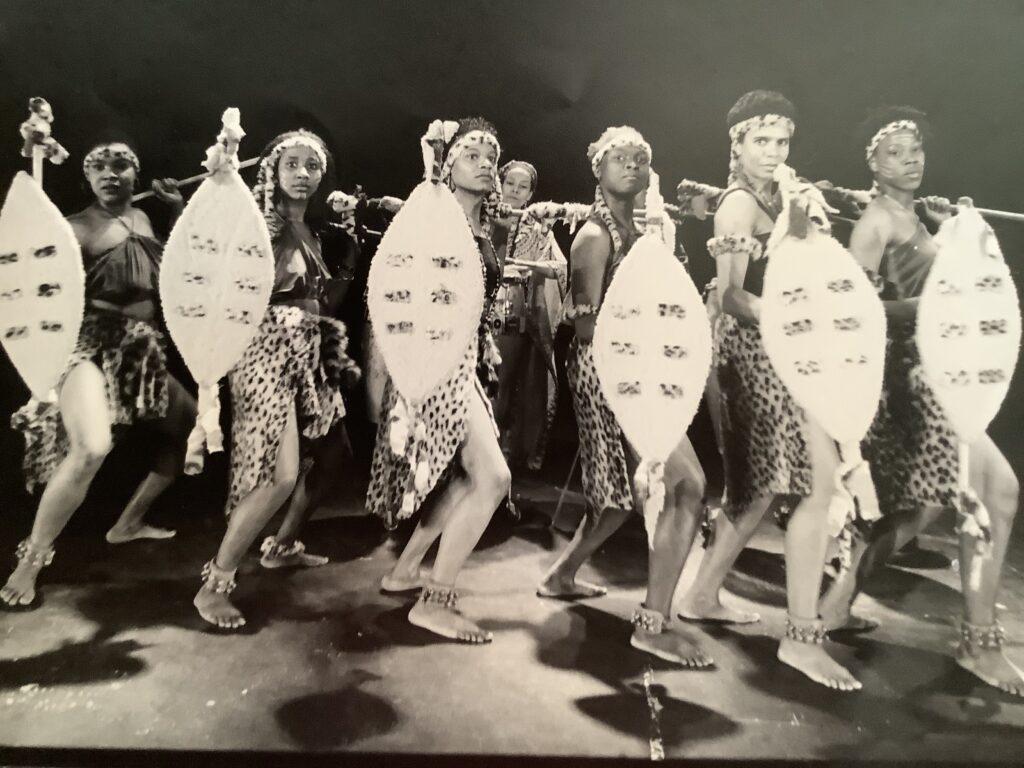
For almost three decades Abasindi was the ‘village’ community centre in the heart of urban Manchester and though it mainly sought to advance opportunities for black women, its doors were open to everyone. The Abasindi women created numerous initiatives: a Saturday school, summer school, creche, hair plaiting, sewing, African dance and drumming groups, women’s and cultural exchanges, immigration and political campaigns and, they ran a shop selling African and Caribbean artifacts. Their activism focused on improving education for black children and women, challenging the everyday criminalization of black youth, improving political representation, preventing the forced removal of immigrants and particularly important, they fought against domestic violence and black women’s lack of access to refuges and other support services.
I was an Abasindi woman and although the organisation is no longer active, I still consider myself an Abasindi woman. It was among my Abasindi sisters that I found my political footing as a black British woman in the UK and it was among them that my confidence and self-esteem grew.
Racism destroys self-esteem… if you choose to take nothing else from my story, please remember this.
I had fun too. The picture below shows me in performance (I am second from the right) with the Abasindi Pan-African Dance and Drumming Group.
It was among Abasindi women that I made the decision to start wearing my hair in dreadlocks. Ask any black woman, or black man for that matter … ‘locking’ one’s hair is not simply a matter of choosing a hair style. For me, it was an act of reclamation – my locks were to become the symbol of self-love I needed to show to the world as I emerged from a childhood during which my skin and hair had largely attracted derision or ridicule. These short extracts from the book illuminate what I mean…
If it were ever possible to reduce the Abasindi Cooperative to an essence, this is the assertion we would make: that in the […] wake of Sojourner Truth’s historic speech, the Black woman has sought to position herself as subject rather than as backcloth to the tapestry of someone else’s design. The Abasindi woman was plot – not plot space. And it is as plot that Abasindi asserted its own aesthetic standards of beauty. p.88
The celebration of skin, body and hair that surfaced within the context of the Abasindi Cooperative suggested a conscious act of insurgency – a political activism of sorts. But conscious or not, the championing of hair left natural and the perfecting of African hair styles, the love of lack skin rather than its grading by shade and the assertion that the Black woman’s body, however shaped, is unto itself beautiful, but more than this, is hers and hers alone, was undoubtedly an act of reclamation. p.88
Armed with our Afros, cornrows, braids and locks, we were ready to do battle on several fronts and we organized around issues such as the lack of educational opportunity for black women and children, domestic violence, the impact of immigration controls, the marginalization of Black art and the criminalization of Black young people. p.91
From the Abasindi standpoint, loving the black body, loving black skin and loving black hair was indeed an expression of felt personal freedom; but as a collective, in reconfiguring beauty in the image of the black women we were, the adornment and fashioning of our bodies, skin and hair was the articulation of an urgent political insurgency. p.108
A lesson indelibly etched on us by being part of Abasindi was the recognition that a female body that is undisciplinable rather than constrained is more than a mere symbol of freedom, it is freedom itself. As the images that are woven throughout this book reveal, we fashioned ourselves in our own likeness and what emerged were diverse, multiple representations of the Black woman – traditional, contemporary, natural and straightened – we wore them all. p.160
I live with my husband in the land of his birth, Barbados. We live in the Parish of Christ Church and as strange as it may seem, Robert Burnet Jones, the plantation owner from the 18th century I introduced you to in Post 3, also lived in Christ Church. Perhaps my ancestors really did work on his plantation – wouldn’t that be kismet!
Barbados is not the most inclusive of societies, but it’s a beautiful island and it’s now my home. Anyway, it turns out that inclusion isn’t so much a geographical place as a way of being. My mum didn’t really believe in boundaries and the legacy she left, the values she passed on to us have led to my family being the most inclusive on the planet. My immediate clan are from Sierra Leone and England yes, but we are also from the Philippines, India, Barbados, Dominica, the Democratic Republic of Congo, Zimbabwe and Poland. We come in all shades of white, brown, and black and we love each other. We know what it is to face racism and we have learned not to let racism define who we are and who we love.
I’m retired now and although, after 40 years in Social Work, I didn’t quite manage to save the world, I gave it my best shot… anyway I’m not done yet (retired ain’t dead!).
There’s a lot of peace to be found in the space I’ve created for myself; it’s in the joy of being with the grandchildren (between us we have 11); it’s in the orange hibiscus in my garden and it’s in my saxophone. It’s also in the sea – the sea bordering the south/west coast of Barbados is an expanse of the calmest blue and on the north/east coast, the Atlantic Ocean pounds the shore with an awesome ferocity. Finding the balance between the calm and the ferocious is where I’m heading. It isn’t easy to leave behind the abuse I’ve lived through and researched, but I’m working on it. Recently, I wrote a short story about how my father’s death released me from some of my most painful memories. It was disguised as a piece of fiction but its actually entirely true, except for two points – I didn’t buy my father a green silk tie and I didn’t kill him (that was simply for artistic effect).
If you’re interested in the story listen to this audio file – the essential art of dying
Though I live a quieter life now, there’s still a lot of noise in my head – mostly about the injustices in the world but also and more frequently, about what to cook for dinner. But there’s peace in noise too – listen to this orchestral performance by the whistling tree frogs in Barbados, after a rainy night.
One final thing; back in the day, the slave owner, Robert Burnet Jones was Governor General of Barbados. Today the Governor General is a black woman, Dame Sandra Mason…you can be sure this isn’t kismet, just hundreds of years of struggle.
I’m going to play you out of My World with the song that became the anthem of the Civil Rights Movement, ‘Amazing Grace’ – hope you like it.