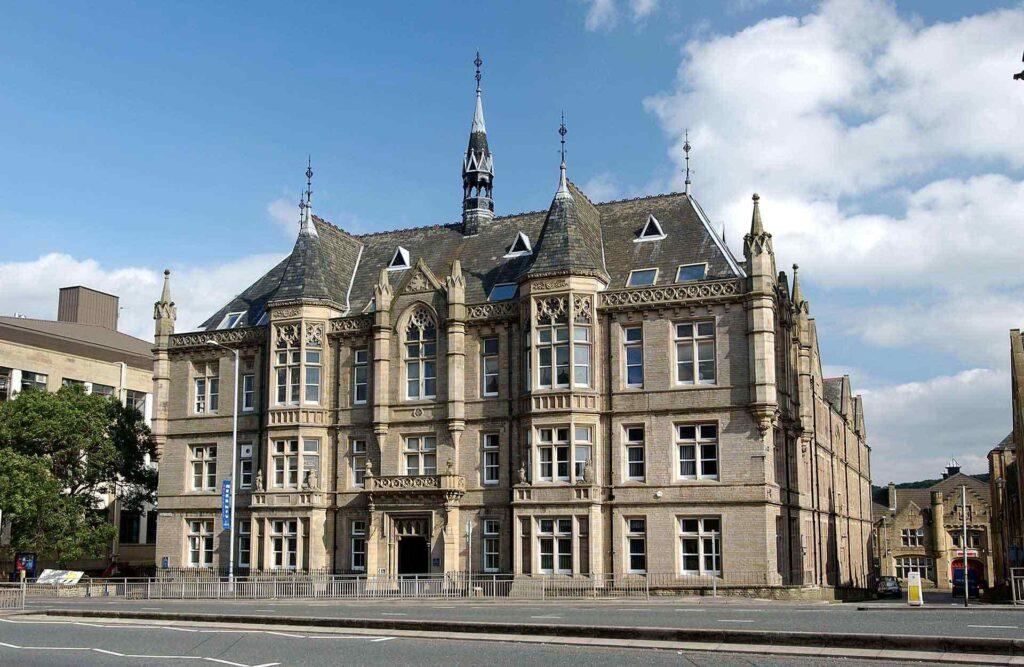
My office at Huddersfield University is in a Hogwarts of a building, the Ramsden Building which is named after Sir John Ramsden, 5th Baronet and Lord of the Manor of Huddersfield. The Ramsden Building is a much loved icon of the town.
I’ve never loved it, I don’t even like it. For me it symbolises wealth and white male privilege. There is no doubting it is a beautiful building but I’ve always felt an imposter walking through its hallowed halls. Too many of my struggles in academia have been to do with white male privilege and my spirit would sink to my boots whenever I entered. As ridiculous as it sounds, I always expected someone to tell me to get out.
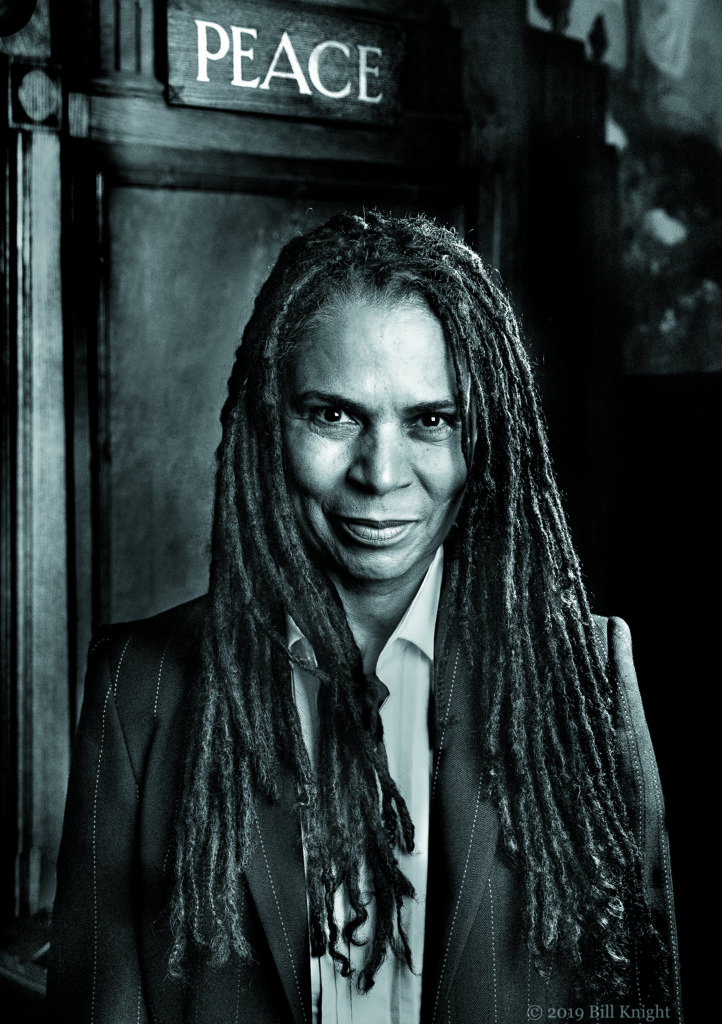
In 2019, I was featured in Phenomenal Women: Portraits of UK Black Female Professors, an exhibition at the South Bank Centre which highlighted gender and race discrimination in academia and drew attention to the fact that out of 19,000 professors in UK universities, at the time only 35 of them were black women.
I’m sure you can imagine the isolation, the alienation, and the struggles I faced. Like so many black and minority ethnic people have found, academia is not a safe space; overt and covert racism is everywhere, not to mention sexism – you don’t have to look for it, it will come looking for you. But I was in love with my discipline and I was in love with research and so I wasn’t about to leave. Furthermore, I was passionate about doing what I could to end violence against women and children and so, together with like-minds from around the world, I created the None in Three Centre (www.noneinthree.org – more about the centre later). Here, among a team of empathic, inclusive and caring colleagues I was able to bury myself in my work rather than having to fight racism every day. These amazing people were the reason I survived. And so back to the exhibition…
I cannot speak for the other black women professors but over the years I faced hostility and isolation for daring to excel; much of the racism and sexism were subliminal, some of it overt and all of it hurtful. I’ve worked in four institutions and notwithstanding the friends I made and the allies who stood beside me, I never really made it into the club. Social exclusion can happen anywhere but masked by their lofty academic aspirations, universities get away with forms of discrimination that would be more evident elsewhere. Things eased as I became more successful but I continued to see discrimination played out. In promotion committees for instance, I would find myself on the minority side of an argument in which others were blocking a woman’s promotion by pointing out that she did not meet all the criteria set out in the rules, despite the fact that those (mostly men) making this judgement had often bypassed the requirements themselves. A particularly cruel example of racism was when a brilliant young African research fellow working with me was given an extension to his contract so that his publications could be included in the latest research assessment exercise only to immediately have it terminated after he was no longer of use. Shockingly, at the same time, two white research fellows were given permanent positions. My outrage was met with a brandishing of rules in support of the decision and I was asked “you don’t expect the rules to be bent because he’s black, do you?” Well, hell yes! Why not since the rules are clearly being used to sustain the status quo. I learned two things – being a woman Prof didn’t give me much power in a mostly white male club and secondly, rules are not to be trusted. This second lesson was to prove liberating: if there are rules concerning a particular activity do your homework, find out when and why the rules have previously been broken and use the precedent to help in your arguments. This helped me win several subsequent battles.
In spite of the challenges, I never contemplated leaving. I was in love with my discipline and passionate about my research. I survived by inviting like minds to work with me and I surrounded myself with empathic colleagues from across the globe. This is how I was able to do my best work. Fighting racism is important; indeed for many black people in the UK it’s part of the day … you get up, have breakfast, brush your teeth, go to work and … you fight racism. But it can drain your energy and destroy your ambitions – it cannot be all you do. Being part of the None in Three Centre (www.noneinthree.org – see Post 5) showed me what was possible in an inclusive team. Here, I was more than just the response to the racism of others and here, I was able to thrive.
And so back to the exhibition…
Invited to have my portrait taken, I chose the Ramsden Building for my location and in that single act of self-empowerment, dispelled the ghost of Sir John and claimed the right to be at ease in my workplace.